A few weeks ago we published a piece discussing whether one should get a sewer scope inspection on any house they are considering purchasing. If you missed it, you can read it here.
But, if you did and the inspection revealed some damage, what are the options to get this damage repaired? So in this installment we will go over what the options are and the pros and cons of each. Let’s get started.
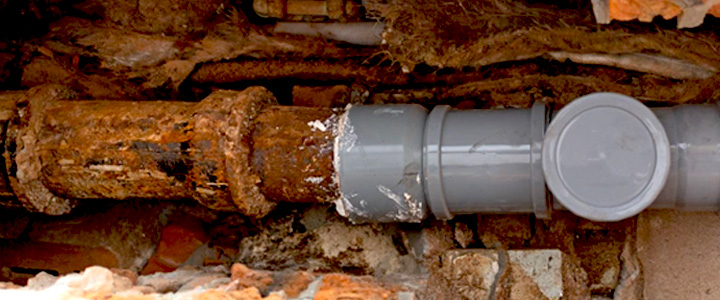
Traditional repair
This method involves digging a trench along the entire section of the damaged line, removing the damaged section and replacing it with a new section. Depending on material, cost can be from $250 (PVC) to $1,000 or more (cast iron) per linear foot.
Pros
- Volume of the sewer line remains unchanged (compared to other methods).
- Allows for a complete visual inspection of the conditions which caused the damage.
- Best option to repair localized damage.
Cons
- Expensive.
- Trench digging can disturb landscaping.
Cure in place pipe
An epoxy impregnated liner is inserted into the line, essentially creating a new pipe within the old one. Cost can be from $250 – $600 per linear foot.
Pros
- Less invasive than other methods.
- Very long lasting repair.
Cons
- Expensive. This relines the entire sewer line, not just the damaged area.
- Slightly reduces the volume of the sewer line.
Pull in place
Similar to the cure in place method, this requires the liner to be pulled, rather than fed from a single end. Cost is similar to cure in place method.
Pros
- Faster curing time than cure in place method.
Cons
- Needs two access points, so one or more small trenches may need to be dug.
- Expensive. Similar cost to cure in place.
Pipe Bursting
A mechanical head is inserted into the line that expands as it moves down the line and physically breaks the pipe along it’s entire length. A new plastic line that trails behind replaces the old line. Cost can be from $250 – $500 per linear foot.
Pros
- Less invasive method. Two small access points needed.
- Very long lasting repair – 50+yrs
Cons
- The old, broken sewer pipe remains and is not removed
Internal pipe coating
A thick epoxy resin is applied in the area of the damage, sealing off cracks and holes. Cost can be from $100 – $250 per linear foot.
Pros
- Cost effective as it is only applied at the local area of damage, not along the entire length of the pipe.
Cons
- Not as long lasting as other repair methods.
Sliplining
In sliplining, the old damaged pipe is replaced by a new, smaller diameter pipe that is fed inside of the old one. The gap between the two pipes is then filled by a resin material creating a composite pipe. Cost can be from $150 – $250 per linear foot.
Pros
- Quick repair.
- Less disruptive.
Cons
- The new line will carry less volume than the line it replaces.
Hydrojetting
Hydrojetting is a cost effective method for clearing out blockages or tree root invasions. It works by using a high pressure water jet to shear off tree roots at their invasion point. Cost can be from $700 – $1,000.
Pros
- Lowest cost
- Restores sewer line functionality immediately with no downtime for epoxy curing, etc…
Cons
- Not a repair in the true sense. It restores sewer line functionality but does not address root causes (pun intended). Treats tree root invasions as a chronic condition requiring regular maintenance. So while inexpensive initially, the cost of repeated hydrojetting adds up over time.
Depending on your particular problem, some methods may be more suitable than others or not possible at all. Be sure to consult with whichever repair company you choose over which options are available to you.
#actionableintelligence #informeddecisions #sewerrepair #sewerproblems #sewerinspection #sewerscope