
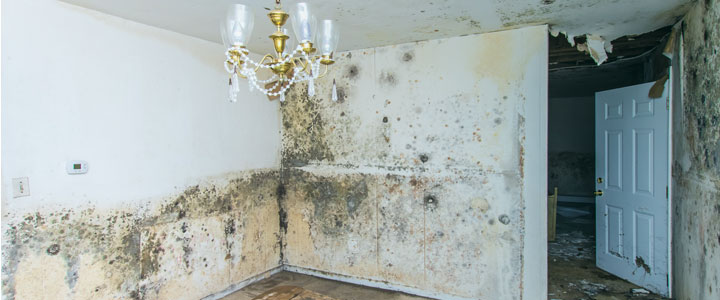
Mold Facts
Mold is Everywhere
Mold spores are found both indoors and outdoors. They cannot be eliminated from indoor environments. Some mold spores will be airborne and some can be found on settled dust, although they will not grow if moisture is not present. Therefore, the key to controlling mold growth in your home is controlling moisture!
Mold is Fungi
Molds are organisms that are found indoors and outdoors. They are part of the natural environment and play an important role in our ecological system by breaking down and digesting organic material. Molds are neither plants nor animals and are part of what is known as the Kingdom Fungi.
The main role of fungi in the ecosystem is to break down dead materials, such as fallen leaves, trees, insects and animal carcasses. The same enzymes that assist fungi in breaking down dead materials are what help fungi to damage wooden components in a building. Molds can damage food, stored goods, and building materials in houses.
Negative Health Effects of Mold
- Inhalation exposure to mold indoors can cause negative health effects in some people.
- Molds produce allergens (substances that can cause allergic reactions), irritants and potentially toxic substances (mycotoxins).
- Mold does not have to be alive to cause allergic reactions in some people.
Symptoms of Mold Exposure
There are many symptoms of mold exposure, with allergic reactions (wheezing, difficulty breathing, headache, sneezing, runny nose, eye irritation and skin rash) being considered among the most common.
These and other symptoms may be associated with exposure to mold. But all of these symptoms may be caused by other exposures or conditions unrelated to mold growth. So it is important not to assume that mold is the cause of such symptoms. Only testing for mold can rule mold in or out as a suspect in these cases.
If a person experiences these symptoms only when occupying a particular building, or part of that building, then that person may possibly be experiencing symptoms of mold exposure.
Mycotoxins
Under certain growth conditions, some molds may produce toxic byproducts called mycotoxins. Some of these mycotoxin producing molds are commonly found in moisture damaged buildings and exposure can occure from inhalation, ingestion and skin contact. It is not possible to determine if a mold is producing mycotoxins through visual observation.
Many fungi, including species of Aspergillus, Penicillium, Fusarium, Trichoderma, Memnoniella and Stachybotrys Charterum can produce potent mycotoxins. For reference, Stachybotrys Charterum is the mold species commonly referred to as “black mold” or “toxic mold”.
What Mold Needs to Grow
Most of the mold found indoors comes from the outdoors because mold spores can easily float on gentle air currents. If the spores land on suitable organic material inside a building, mold can begin to grow. But mold needs two things in order to grow and survive: moisture and food.
Moisture
Mold does not need a lot of moisture to grow. A little condensation in a bathroom or around a windowsill can be enough. Common sites for indoor mold growth include bathroom tile and grout and areas around windows and sinks.
Common sources of moisture include roof leaks, condensation due to high humidity, slow leaks at plumbing fixtures, humidifiers, sprinkler systems and floods. Mold has been found to germinate, grow and produce spores in as little as 24 hours after water damage occurs!
As stated at the beginning: Moisture control is the key to mold control!
Food
Mold can grow on virtually any organic substance. Buildings are full of organic materials that mold can use as food, including paper, cloth, wood, plant material and even soil. Molds secrete digestive enzymes that decompose the material, making nutrients available. Molds can also grow on inorganic material such as concrete, blass and metal because they can grow on the dirt or dust that is present on these surfaces.
Identifying Mold in Buildings
A building can become a perfect place for mold growth when the building has construction flaws, systems or components that are damaged or inoperable or experience delayed maintenance. Any part of a building that facilitates the entry of moisture into its materials creates the potential for mold growth.
About a third of all homes in the U.S. experience some type of water damage every year (whether the occupants are aware or not!). Where there is water damage, there may be mold growth.
We Use our Eyes
A visual inspection is one of the most important parts of a mold inspection. An inspector is going to look for evidence of moisture intrusion, water damage, apparent mold growth and conditions conducive to mold growth.
An inspector will also look for apparent mold growth. This may appear cottony, velvety, granular or leathery and have varied colors of white, gray, brown, black, yellow and/or green.
Notice the word “apparent” in bold italics above. Any mold inspector should never tell you on the spot that “this is mold” or “you have mold”. Why? Because the only way to confirm this is through testing. Anybody in the state of Texas that is licensed by the state to inspect for mold will have been through training where it is stated repeatedly to never state flatly that someone has mold without testing. Why? Because not everything that appears to be mold is in fact mold.
So this is why in inspection reports you will (or should) see phrases like “apparent mold growth”, “suspected mold growth” or “suspected organic growth”.
We Use our Nose
Mold can at times be a bad hide and seek player. Because there are times where you may not see it, but you sure can smell it.
Some compounds produced by molds have strong odors and are volatile and quickly released into the air. These compounds are known as microbial volatile organic compounds (mVOCs). These are small molecules than don’t tend to settle on carpeting or other surfaces as mold spores do.
They can pass through walls and spread througout the inside of buildings. However they cannot be transmitted very far outside outdoors when exposed to sunlight. So their presence inside of buildings is direct evidence of active or recently active mold growth.
Because mVOCs have strong and unpleasant odors, they are often the source of moldy odors and musty smells frequently associated with mold growth. A moldy odor suggests that mold is growing in the building and should be investigated and tested.
So, should I get mold testing done with my home inspection?
Ok, so after all the above you’d think that Gumshoe Property Inspection LLC, being also in the business of doing mold inspections would say “absolutely”.
But in the end we say as the client it is ultimately up to you. While it is never a bad idea to get mold testing done we do understand there can be varying reasons not to.
First of all – budget. While we offer mold testing, it is a separate service we charge for and not included in a standard home inspection. And while we feel we offer a very competitve rate for this testing we understand it won’t always be within scope of everyone’s budget.
That said there are some circumstances and/or conditions where we recommend testing or you should consider getting it done.
- Does the home you are considering exist in an area known to have flooded during a hurricane (such as Harvey) or other heavy tropical storm? If yes, you should consider testing.
- Did the current owner disclose (in the seller’s disclosure) previous flooding or water damage of the property? If so will they share documentation of the remediation work and post remedial verification? If they disclose previous flooding you should consider testing.
- If during the home inspection we discover any of the following, we recommend testing.
- Evidence of active or past moisture intrusion into the home.
- Visible suspected mold growth and/or
- The presence of moldy/musty smells in the home
All mold inspections we provide are conducted according to the Standards of Practice and guidelines of the International Association of Certified Indoor Air Consultants (IAC2).
You can find out more information on our mold testing services and pricing on our website here. As always, if you have any questions please drop us a line at br****@***************on.com or reach out directly at 713-424-1411. Click here to schedule an inspection.
#actionableintelligence #informeddecisions #houstonmoldtesting #moldtesting